Perfume Bottle Manufacturers in Germany: A Practical Sourcing Guide
When you search for perfume bottle manufacturers in Germany, company names alone are not enough to build a sourcing shortlist. Some businesses focus directly on perfume and cosmetics packaging; others manufacture jars, beverage bottles or a much wider range of containers. Even when a group has German operations, the particular fragrance bottle may be produced elsewhere.
This guide reviews five names that appear in fragrance-sourcing research and explains how to qualify their relevance. It is not a top-five ranking. The purpose is to help buyers identify the correct product division, establish manufacturing origin and request comparable quotations. Company scope was checked against the official sources linked below on October 3, 2026.
Start with verified perfume-packaging scope
| Company | Publicly described scope | Qualification needed |
|---|---|---|
| Gerresheimer | Fragrance, cosmetics and personal-care packaging | Exact product, production site and complete-set scope |
| HEINZ-GLAS | Perfume and cosmetics glass with finishing and components | Standard versus custom route, factory allocation and decoration MOQ |
| Stoelzle Glass Group | Perfumery and cosmetics through specialist operations | Country and site: Masnières is in France |
| Noelle + von Campe | Glass containers, prominently jars and related closures | Perfume-specific suitability must be established |
| Wiegand-Glas | Glass/PET packaging, prominently food and beverage formats | Perfume format and pump interface must be confirmed |
1. Gerresheimer: contact the cosmetics business
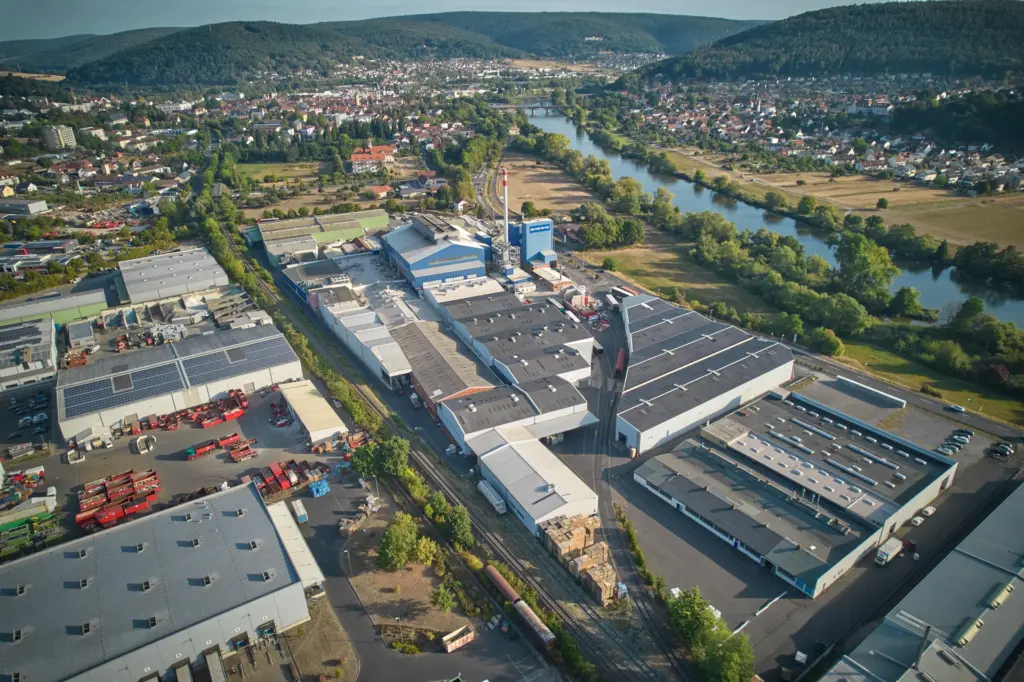
Gerresheimer's cosmetics offering includes glass and plastic packaging for perfume, cosmetics and personal care, with standard and custom designs and decoration services. Its wider pharmaceutical business should not be used as a substitute for checking the specification of a cosmetic bottle. Source: Gerresheimer cosmetics products and services.
Start with capacity, neck finish, appearance and planned annual demand. Ask which production site would manufacture the bottle and which partner would supply the spray pump and cap. If origin is part of your brand claim, request confirmation for that specific product rather than inferring it from the group's address.
2. HEINZ-GLAS: review the standard collection and custom route

HEINZ-GLAS describes perfume and cosmetics glass production, finishing and complete-packaging services through German and international locations. Its standard collection includes fragrance formats. These are useful starting points for comparing an existing design with a custom development. Source: HEINZ-GLAS quality and competence; company strategy and supply scope.
Ask whether a proposed format is available from stock or made to order. Obtain separate minimum quantities for the bottle, decoration and closure. A standard shape can reduce development work, but it does not automatically establish availability, lead time or the final decorated-pack MOQ.
3. Stoelzle: identify the fragrance operation correctly
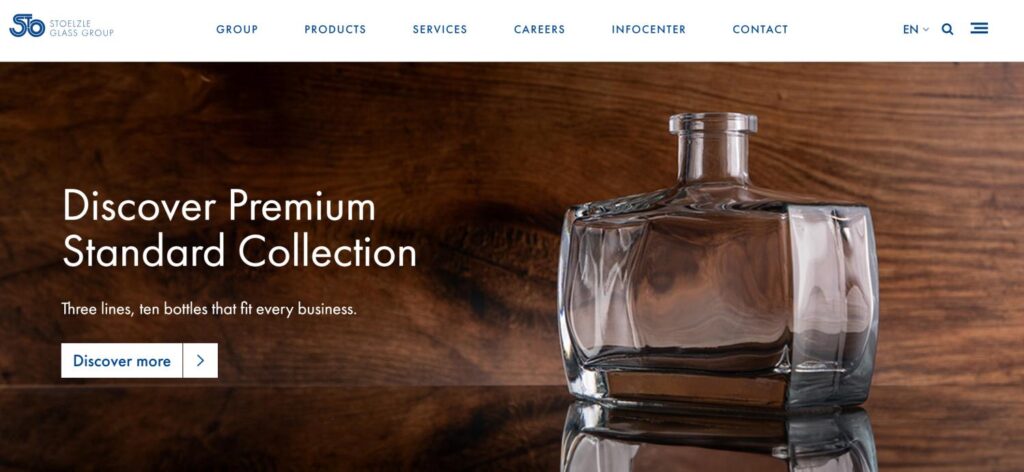
Stoelzle's official information identifies Masnières Parfumerie in France as a specialist center for perfume and cosmetics bottles. Its offer includes custom designs and standard articles with decoration. It can be a relevant European comparison, but this does not make its fragrance production a German factory operation. Source: Stoelzle Masnières.
If your requirement is specifically German manufacture, ask for the proposed site's address before shortlisting. If your requirement is European supply, compare the actual route, component sourcing, transit plan and replenishment process. The distinction changes the procurement decision and any country-of-origin statement on your packaging.
4. Noelle + von Campe: qualify product fit before requesting fragrance pricing
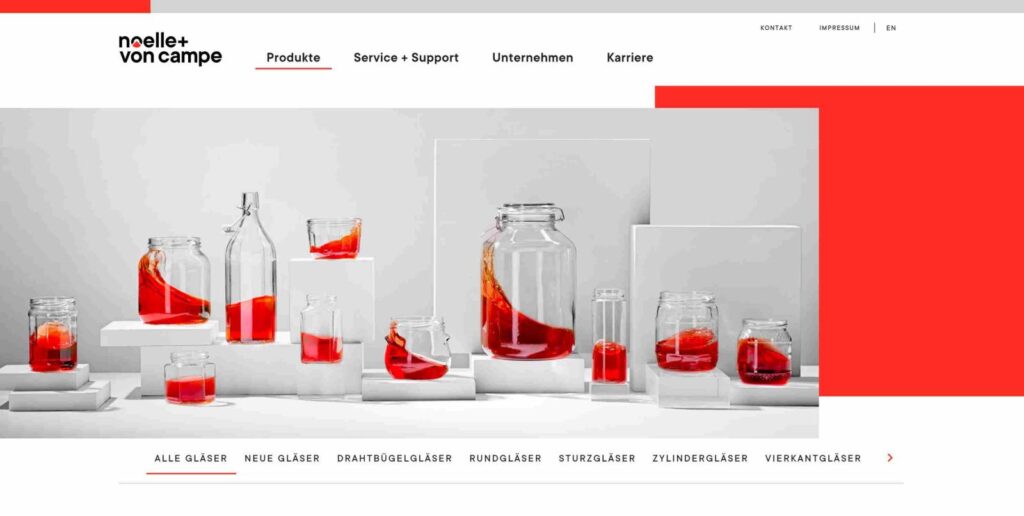
Noelle + von Campe presents glass packaging with a substantial jar range, bottles and closure formats such as twist-off and single-start thread. Its reviewed public range does not by itself establish a standard perfume-spray-bottle offer. Source: Noelle + von Campe products and finishes.
For a fine-fragrance project, first ask whether the proposed neck and bottle format are within its scope. A supplier can be an experienced glass manufacturer without being the right option for a small fragrance launch. Only advance to sample and pricing discussions after the application and order scale are confirmed.
5. Wiegand-Glas: distinguish container capability from perfume capability
Wiegand-Glas presents glass and PET packaging and an extensive catalog of food and beverage containers. Those capabilities justify research into a glass-packaging project, but do not alone confirm a perfume bottle with your required atomizer interface. Source: Wiegand-Glas official product overview.
Ask for a fragrance-specific drawing, the intended closure interface and the supplier's proposed production quantity. If the requirement falls outside its scope, narrow your shortlist to companies with the relevant perfume-packaging range instead of forcing every glass manufacturer into the same comparison.
Compare German and other sourcing routes on the same brief
Country labels are not a quality specification. Avoid assuming that one location guarantees a leak-free pack, a particular recycled content or a fixed delivery time. Compare the actual approved sample, drawing, test plan and commercial proposal.
- Origin: confirm where glass, decoration and final components are produced.
- Fit: agree bottle-neck dimensions, pump attachment, dip-tube length and cap clearance.
- Performance: test the assembled pack with the intended fragrance and agreed conditions.
- Decoration: approve appearance, artwork placement and the relevant durability checks.
- Commercial scope: separate tooling, sampling, glass, pump, cap, decoration, packing and freight.
- Continuity: document repeat-order lead time, sample retention and change control.
When to compare a China-based option
A China-based quotation is useful when you want to compare existing bottle designs, customized finishes or a new bottle mold against a European proposal. Keep the capacity, quantity, decoration and complete-set scope identical. Compare the delivered plan and approval work as well as the product price.
STDBOTTLE's current starting quantities are 1,000 pieces for available undecorated stock, 3,000 pieces per model, per color and per logo for decoration, and 15,000 sets for new-mold bottle projects. Full tooling is quoted at US$1,600–2,500 for the agreed mold set. Sampling is US$200–500 including shipping, creditable against a later bulk order. These are STDBOTTLE's project references, not a comparison of German suppliers' prices or minimums.
See the China supplier guide and the stock-versus-custom-mold comparison to define which route you want quoted.
Frequently asked sourcing questions
Does a German company name guarantee German-made perfume bottles?
No. Ask the supplier to identify the factory allocated to your product and confirm origin in its documentation. Different products or processes may use different locations.
Can I compare suppliers using a universal MOQ or lead time?
Use project-specific answers. Existing stock, a standard mold made to order, a custom shape and a decorated bottle can have different minimums and schedules, even within one company.
What should I send in my first inquiry?
Provide the bottle reference or drawing, capacity, quantity for each variant, target appearance, artwork, pump and cap requirements, delivery destination and planned launch date. Identify any country-of-origin requirement at the outset.
Build a quotation you can compare
For a STDBOTTLE option, send your packaging brief or email [email protected]. We can review bottle, pump, cap and decoration together. Before placing an order with any supplier, use the sample approval checklist to document what has actually been accepted.